
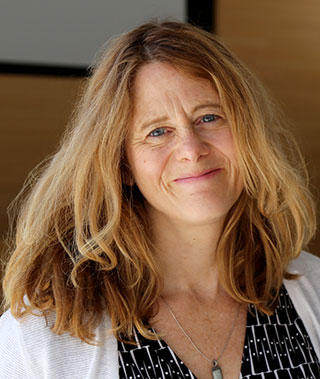
Welcome to the Sillerman Center for the Advancement of Philanthropy.
Since its founding in 2008, the Sillerman Center has engaged established and emerging philanthropists and their advisors, undergraduates and graduate students to achieve our mission to inform and advance social justice philanthropy. Since 2015, when I became Director, we’ve aligned our work with the overarching mission of the Brandeis University’s Heller School: “Knowledge Advancing Social Justice.”
When I talk about my work, even some experienced grantmakers still ask me, “What exactly is social justice philanthropy, anyway?” There is no set-in-stone definition. But here are some common characteristics:
- Social justice philanthropy focuses on systemic change that addresses historical injustices and root causes of racial, economic, and environmental inequities.
- Social justice philanthropy nurtures authentic relationships, relationship building, and support for organizers and advocates trying to repair unjust systems, laws, policies, and practices. Through building these relationships, we can work toward dismantling the top-down power over the legacy of philanthropy.
- Social justice philanthropy involves and includes the people affected by a social problem by centering them as sources of expertise and as key decision-makers and respecting their self-determination by giving with no strings attached.
- Social justice philanthropy strives to make grantmaking accessible, transparent, accountable, and responsive rather than burdensome and opaque.
- Social justice philanthropy donors and foundations act in solidarity with social justice movements and work to make the philanthropic sector itself more racially, ethnically, and culturally diverse, accessible, inclusive, and equitable.
- Social justice philanthropy invests its assets in socially responsible ways that do not contribute to the injustices that grantmaking is trying to remedy. Further, foundations use their assets and investments, alongside grants, to support progressive social change.
Amid a growing concentration of wealth in our nation, increasing economic inequality and enduring social challenges, philanthropy has, in recent years, faced important, incisive critiques, all of which inform our work and help determine the questions we explore. At the same time, our team continues to be inspired by the ongoing, often unseen work within the sector designed to make philanthropy more equitable, more accessible and ultimately more effective in addressing today’s problems. Our publications, events and educational programming highlight these forward-looking, solutions based practices. Bearing witness to this work has convinced us that social justice philanthropy can be a reparative force in our contemporary society. We aspire to be a helpful, collaborative, and trusted partner.
I hope you will return to this site again to learn about our upcoming events, to read our latest publications, to sign up for a webinar or to explore our educational and fellowship opportunities.
Susan Eaton
seaton@brandeis.edu